
PP Packaging Pails
20L Light-Duty vs Heavy-Duty PP Packaging Pails: What Buyers Should Confirm
A buyer-focused comparison checklist for reviewing 20L light-duty and heavy-duty PP packaging pails before samples or quotation.
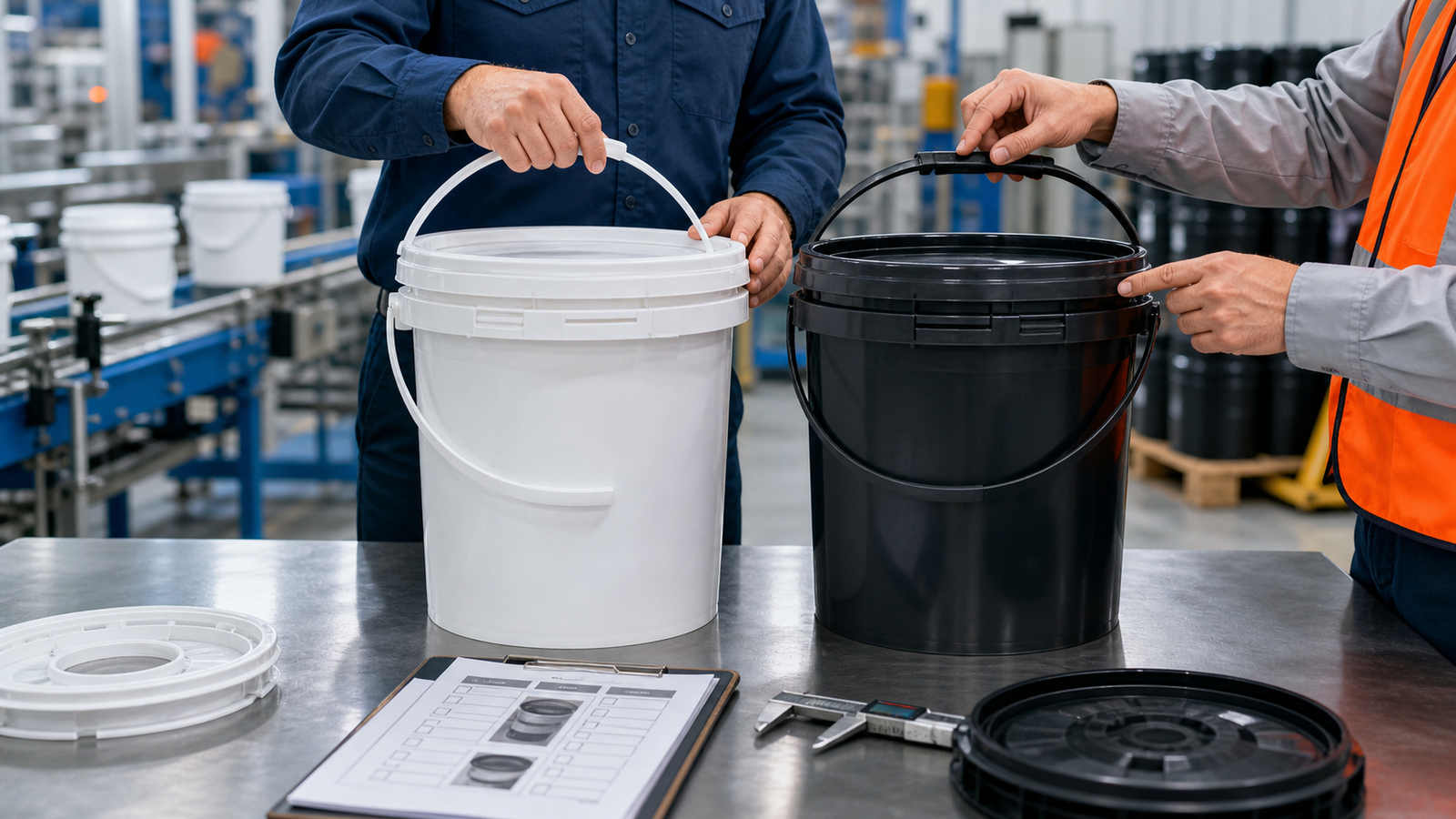
“Light-duty” and “heavy-duty” are useful product references, but the names alone do not confirm suitability. Buyers should provide the intended contents, net fill weight, filling method, closure needs, handling route and destination, then compare samples and confirmed specifications before ordering.
Two pails with the same nominal capacity may be intended for different packaging requirements. For an overseas buyer, the practical question is not which label sounds stronger. It is whether the selected pail, lid and handle arrangement matches the buyer’s filling, closing, handling and transport process.
Do not select a pail from the duty name alone
“Light-duty” and “heavy-duty” are commercial model descriptions on LUTOP’s product pages. They should not be converted into unverified claims about wall thickness, load rating, drop performance or stacking performance. Ask for the current product information and review it against the actual application.
Describe the intended contents and fill weight
Tell the supplier what category of material will be packed and provide the expected net fill weight. If compatibility, regulatory documentation or a special use claim matters, request a specific review rather than assuming that a general-purpose PP pail automatically meets it.
- Contents or product category.
- Expected net fill weight per pail.
- Filling temperature or process conditions if relevant.
- Any document or compatibility question requiring confirmation.
Review the lid and closure workflow
A buyer should explain how the pail will be filled and closed. Manual closing, production-line closing and later reopening may create different questions. Confirm which lid is included, whether any sealing feature is required and how the buyer plans to check closure during sample evaluation.
Confirm handle and handling requirements
Describe how filled pails will move through the buyer’s operation: manual carrying, internal transfer, pallet preparation or distributor handling. The supplier can then identify the available handle configuration for review. Do not publish or rely on an unsupported carrying-load statement.
Compare both options with the same checklist
| Buyer question | Light-duty reference | Heavy-duty reference |
|---|---|---|
| Is the exact pail and lid specification confirmed? | Request current details | Request current details |
| Has the intended contents and fill weight been shared? | Buyer to provide | Buyer to provide |
| Does the sample fit the filling and closing process? | Evaluate a sample | Evaluate a sample |
| Are packing and shipment requirements agreed? | Confirm in quotation | Confirm in quotation |
Plan a sample review before bulk quotation
When the application is new, a sample gives the buyer a reference for dimensions, lid operation, handle configuration, colour and process fit. Record the sample model and the evaluation result so that the later quotation refers to the same configuration. A sample review is not a substitute for any testing or documentation required by the buyer’s market.
Information to send with the inquiry
- 20L light-duty, 20L heavy-duty or both for comparison.
- Contents category and net fill weight.
- Pail, lid, handle, colour and decoration requirements.
- Filling and closure method.
- Estimated order quantity and destination country.
- Required packing, documents and sample timing.
Related Product Pages
Need to compare 20L pail options? Send LUTOP the contents category, fill weight, closure process, quantity and destination so the inquiry can be reviewed against the correct product references.